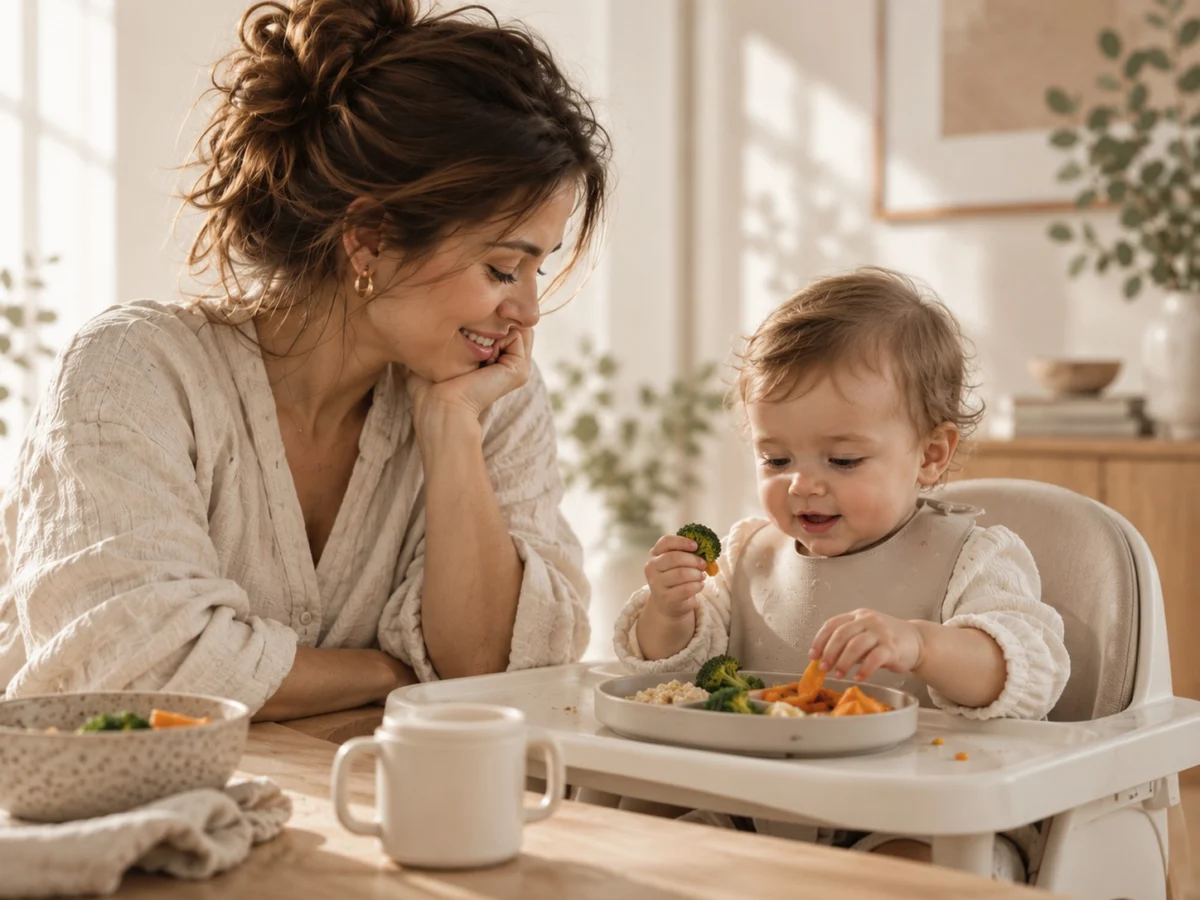
Adults often introduce a new food with a spotlight: “Look what I made,” “try it,” “just one bite,” “if you eat this, then…”. The intention is usually encouraging, but the attention can tell a toddler that something difficult has arrived and everybody is now waiting for a performance.
New foods are easier to approach when the first goal is familiarity rather than immediate acceptance. A food can become more ordinary long before it becomes something the child happily eats.
Make the first exposure small and easy to ignore
Pair the unfamiliar food with things the child already recognizes. A plate made entirely of new foods can feel demanding, while one small piece beside familiar foods lets the child participate in the meal without making the new item the price of admission.
Keep the amount genuinely small. One slice, spoonful, leaf, or piece is enough for the food to be present. Large portions increase waste and often make adults more invested in getting the child to eat what was served.
Presentation can change without turning the kitchen into a laboratory. A different cut, a new preparation, a familiar dip, or serving one component separately may make the food easier to explore. Change one thing at a time if it helps, but avoid creating elaborate recipes solely to hide the ingredient.
Think about portion size from the child’s point of view as well. A huge spoonful of an unfamiliar stew can look like a demand, while one bean, one strip of pepper, or a teaspoon of sauce is easier to inspect. You can always offer more; the first serving does not need to prove abundance.
Let looking, touching, smelling, and serving count
A child may poke, smell, cut, lick, move, ask about, or ignore a food. To an adult, these interactions can look like failure because nothing was swallowed. In reality, they are ways the food becomes less unfamiliar.
If you talk about it, neutral descriptions are often more useful than sales language: crunchy, soft, cold, warm, red, has seeds, smells strong. “You’re going to love it” creates a prediction the child may immediately need to contradict. Curiosity has more room when it is not carrying an obligation.
Try not to ask “Do you like it?” the second the child tastes something. They may need time to form an opinion. A quick yes-or-no review can turn one tiny experience into a permanent verdict: “I don’t like broccoli.” Let the encounter be incomplete.
Remove rewards and keep the response to “no” boring
A sticker, treat, or dessert deal may produce one bite, but it also teaches that the new food is the unpleasant task standing between the child and the good thing. The same happens when adults cheer dramatically after a taste. Huge praise can make the next exposure feel like another performance with an audience.
If the answer is no, a simple “not today” can end the moment. The food can return later without a speech about how many times you have offered it. Repetition works better when each appearance carries less emotional history.
How adults talk about their own dislikes matters too. You do not need to pretend every vegetable is delicious. “I don’t usually choose that one, but it is on the table” leaves room for the child to build a different opinion. Neutrality is more believable than selling every food.
When the child does taste something, keep the response proportionate. A calm “you tried it” is enough if you want to acknowledge it. Big applause can accidentally tell the child that tasting was a risky performance worthy of a celebration, which may raise the stakes next time.
Build repetition into normal life instead of running a tasting program
New foods can appear outside the main meal: cutting fruit together, placing something on a snack plate, choosing produce at the store, or letting the child help serve. The food gets to exist before it becomes “the thing you are supposed to eat.”
If grandparents, child care, or other caregivers are involved, keep the shared message simple: we are offering new foods without requiring a bite. Everyone does not need to adopt a complete feeding philosophy. Consistency around the absence of pressure is enough to prevent the child from facing a different tasting negotiation in every setting.
Some foods become familiar quickly; others stay on the edge of a child’s diet for a long time. There is no guaranteed number of exposures and no useful countdown that turns the tenth appearance into success.
It is also fine to pause and come back later. Repetition does not mean serving the same rejected food every day until somebody gives in. A food can disappear for a while and return naturally when it fits the family meal again.
A successful exposure is not necessarily a swallowed bite. It is a new food being present without pressure, bargaining, fear, or a performance requirement. That ordinary repetition gives genuine curiosity a better chance to appear.