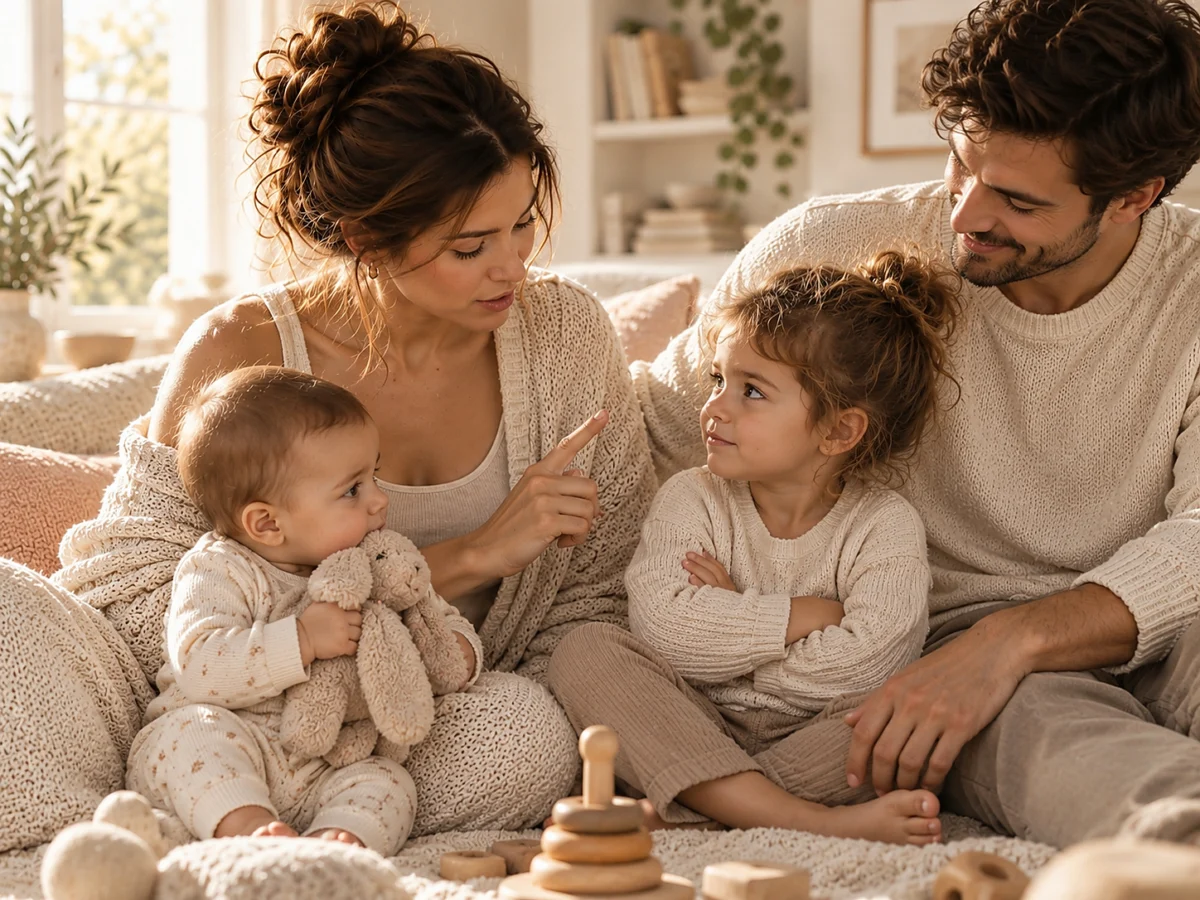
When adults think about “making memories,” it is easy to picture trips, decorations, and special events. Yet many strong family memories grow from much smaller things: hot chocolate after looking at lights, a ridiculous car song, eating the same breakfast every birthday, or a phrase someone always says before leaving the house.
A tradition becomes memorable less because of its scale and more because repetition, meaning, and participation keep meeting in the same place. The goal is not to manufacture a childhood packed with events. It is to create enough continuity that children can recognize a family story they belong to.
Start with something that could survive a difficult year
If a tradition requires months of booking, two days of cooking, and coordinating twenty people, it may be wonderful and also fragile. Ask what the smallest recognizable version would be if someone were sick, tired, traveling, working, or the family were in a difficult season.
Maybe the tradition is not “throw the themed party.” Maybe it is lighting one particular candle and telling the same short story. Maybe it is not “go to the same restaurant every year” but choosing one special meal together. The clearer the heart of the tradition, the easier it is to adapt the form without feeling that the meaning disappeared.
Small traditions also reduce a common burden: one adult becoming the production manager for all family memories. If the ritual only works when one person plans, buys, remembers, and coordinates everything, it can create resentment instead of belonging.
Give children a role that actually belongs to them
Memories feel different when children are not simply attending but know which piece is theirs: choosing the song, hanging one decoration, stirring a recipe, opening a box that appears only that day, or choosing the story. That small job turns the tradition from something adults perform “for the kids” into something the family does together.
The role can change with age. A four-year-old might set out napkins; a ten-year-old may make part of the recipe; a teenager might choose the music or decide how to adapt the plan. A living tradition does not require participation to look the same forever.
Let children add variations too. If they change a recipe, invent a joke, or add a new step, they may be making the tradition theirs. Change is not automatically a loss of authenticity.
Let sensory cues do some of the remembering
A food, smell, song, phrase, object, or even time of day can become a shortcut back into a family memory. You do not have to engineer these cues from scratch. Often they already exist and simply need enough repetition to become recognizable.
Saving one object between years—a notebook, ornament, stained recipe card, mug, or box—adds physical continuity to something that might otherwise feel abstract. Eventually, bringing that object out already communicates, “This is back.”
Photos can work the same way when they do not become the whole point. Repeating one photo in the same place or with the same object can show time passing without making everyone perform for the camera throughout the tradition.
Do not fill the calendar with traditions because you are afraid memories are missing
It is easy to keep adding: pizza night, Saturday breakfast, seasonal boxes, holiday baking, monthly photos, annual outings, birthday breakfasts. Each idea can be lovely on its own and together become another schedule to maintain.
Children do not need every week to contain a special event. A tradition gains meaning partly because it stands out inside ordinary life. A few things that reliably return are often more recognizable than many rituals that happen twice and then disappear.
If a tradition starts feeling like obligation, ask who is enjoying it and which part still matters. You can simplify it, share the work, or let it go. Continuing only because “we always do this” can empty out the sense of belonging the tradition was supposed to create.
Let the tradition change when the family changes
Families move, schedules shift, relationships change, new people join, children grow, and life happens in different places. If the tradition only “counts” when it happens in exactly the same form, it can create pressure instead of continuity.
Decide what the heart of it is and let the rest evolve. You may no longer visit the same park every winter, but you can still take a walk together to find the first holiday lights. A large gathering may become a video call plus the same shared recipe. The form changes; the common story can remain.
It is also okay to retire a tradition that no longer represents the family. The memories do not disappear because you stop repeating it. Sometimes ending one ritual intentionally makes room for another that fits the current season better.
Children do not need a childhood packed with spectacular events to build strong family memories. They need enough things to return, change with them, and let them say naturally, “In our family, this is something we do.”