
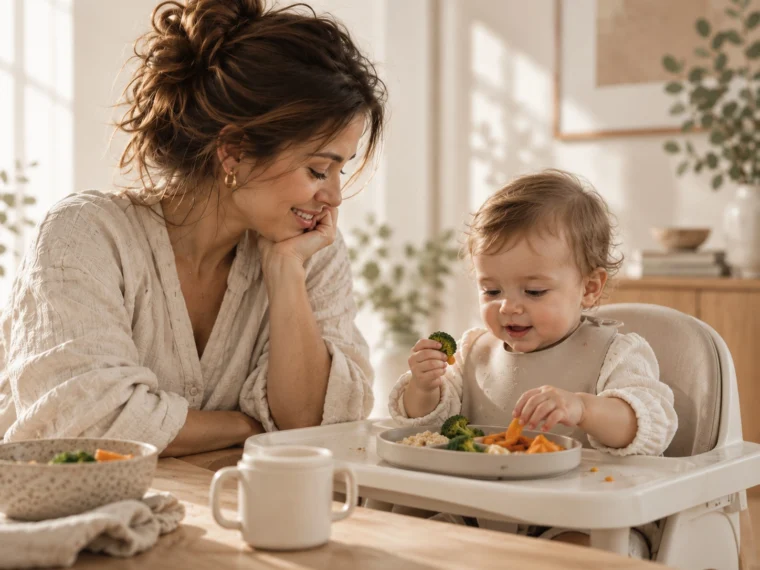
Child feeding
Kids’ snacks: how to build a routine that doesn’t constantly replace meals
Snacks are not usually the problem. The harder pattern is food appearing in small amounts all day long until meals no longer…
Clear, actionable guidance to move from uncertainty to a practical next step.
52 articlesSnacks are not usually the problem. The harder pattern is food appearing in small amounts all day long until meals no longer…

Coordinating siblings does not mean doing everything together. It means sharing what reduces work and reserving individual attention for what truly needs…

Splitting bedtime is not simply dividing visible steps fifty-fifty. Preparation, remembering, anticipating, and remaining on call count too.
A nap can still be useful while beginning to push bedtime later. The useful signal is the pattern across several days, not…
A short nap can change the afternoon without requiring a full schedule rebuild. Flexible structure keeps the family out of rescue mode.
A no-nap day does not always require moving snack, dinner, bath, and bedtime earlier. Reducing demands may help more than moving every…
After several irregular sleep days, restoring a few anchors first usually works better than correcting every clock time at once.
With two different ages, the goal is not two perfect routines. It is making both routines fit inside the same home and…
A child can have two different nap patterns because they are also living in two different contexts. The useful work is organizing…
When the nap disappears, the family may still need a pause. Quiet time works best when it becomes a different kind of…
Weekends can feel different without losing all structure: protect the anchors that matter and choose exceptions intentionally.
Sharing a room can create closeness and an entirely new set of logistics. The goal is not to make two children function…