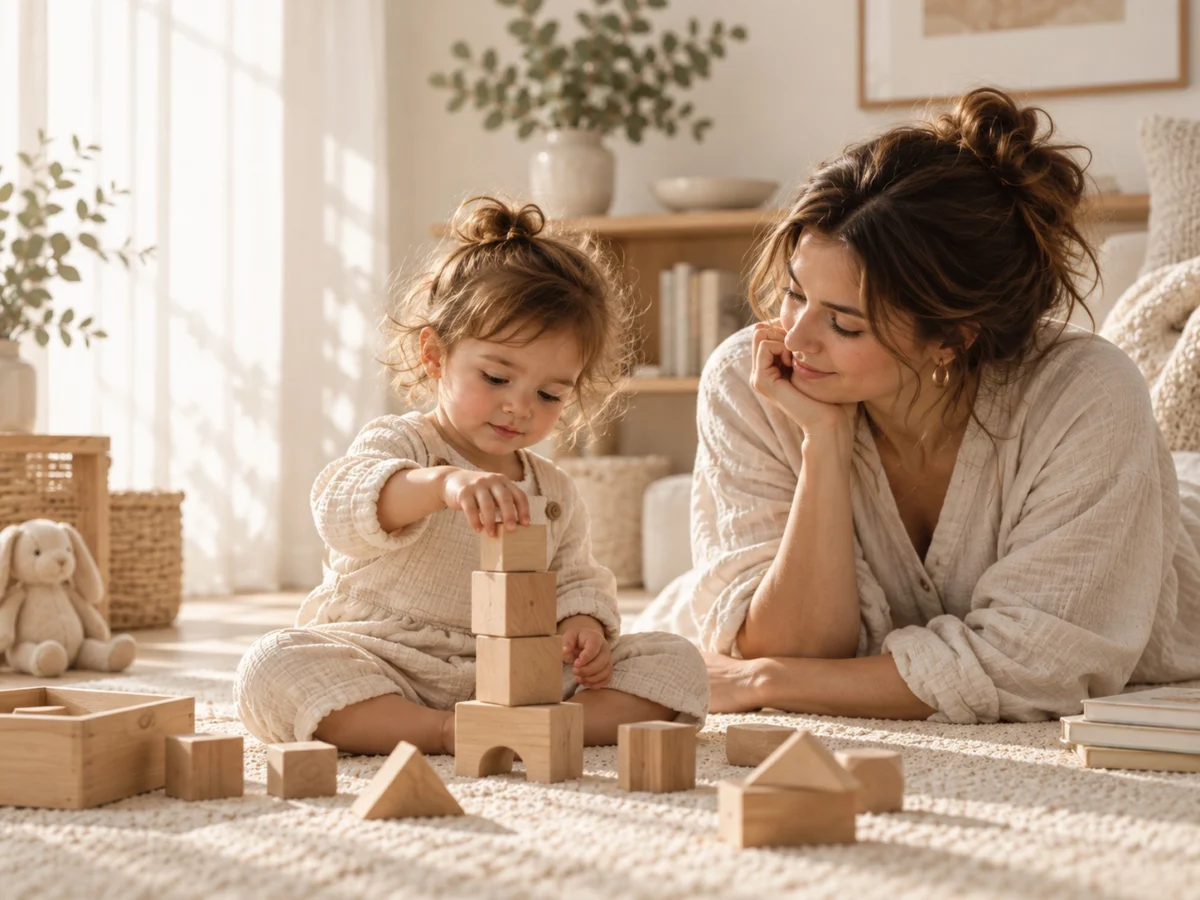
“Time to clean up” sounds like one instruction to an adult. To a young child, it may mean stopping a game they are still absorbed in, deciding where dozens of objects belong, giving up a construction they care about, and doing a task that is much less interesting than the one they were just doing.
Cleaning up is easier to teach when it is treated as a household skill rather than a test of obedience, gratitude, or character. The expectation can be real while the task is still broken into pieces a child can actually enter.
Make the job small enough that the child can find the first move
“Clean your room” hides too many decisions. Try “Put the cars in this bin while I start the blocks,” or “Let’s find all the animals first.” A concrete starting point reduces the mental work needed just to begin.
Helping is not the opposite of teaching. Many routines are learned side by side before they become independent. You might do most of the reset with a toddler, split it more evenly with a preschooler, and gradually step back as the sequence becomes familiar. The exact balance can change with age, tiredness, and the size of the mess.
Look at the storage too. If putting one toy away requires opening a heavy box, sorting pieces into six categories, and reaching a high shelf, the organization system may be designed for adult satisfaction rather than child participation. Broad categories, accessible bins, and fewer items out at once make cooperation more realistic.
Treat cleanup as a transition out of play
The resistance is often not about the bin. It is about the ending. Give a warning that helps the child close what they are doing: “Two more train trips, then we clean up for dinner.” If a block structure matters, you may sometimes photograph it or agree that one project can remain while the rest is reset.
You do not have to preserve every unfinished game, but recognizing that an ending costs something makes your instruction more accurate. Adults save documents and finish sentences before switching tasks; children also benefit from a recognizable closing point.
Build cleanup into a few predictable moments rather than correcting every object all day. Maybe the room gets reset before dinner, before another large activity, or before bedtime. Then cleanup becomes part of the household rhythm instead of something announced only when an adult finally cannot tolerate the mess.
When your child refuses, keep the consequence connected to the space
If the floor is already full and your child wants to open another large toy set, a related limit makes sense: “We need room for that. First we put some of these toys away.” If the family needs the table or walkway, cleaning enough to use the shared space is a real reason.
Threats such as “I’ll throw all your toys away” usually make the conflict much larger and may be impossible or undesirable to follow through on. The lesson you want is shared responsibility for a space, not fear that belongings disappear when an adult becomes frustrated.
Be clear about what “done” means. If the child puts toys into the wrong-but-reasonable bin and you immediately reorganize everything, participation can start to feel pointless. Decide whether the goal today is perfect sorting or helping restore the room to a usable state.
Rewards can sometimes motivate a new routine, but a prize for every ordinary cleanup can quickly create a second negotiation: “What do I get?” Often the real feedback is enough: “We made space for dinner because we both worked on it.”
Build responsibility over time instead of demanding full independence every day
A child who cleans up easily on Saturday morning may need much more help after daycare. A large mess may overwhelm a child who handles a small one well. Flexing your support does not erase the skill.
You can also prevent some battles by limiting how much comes out at once. “Let’s put the trains away before we bring out the paint” is easier than asking a tired child to restore an entire room at the end of the day.
Notice progress that is more subtle than “cleaned the whole room alone”: starting after one reminder instead of six, knowing where common things belong, carrying a bin back, or joining you for five minutes without turning the task into a fight.
The goal is not to raise a child who loves tidying. It is to build the ordinary expectation that using a shared space includes helping return it to a state the family can use again—and to teach that expectation in a way the child can gradually take over.