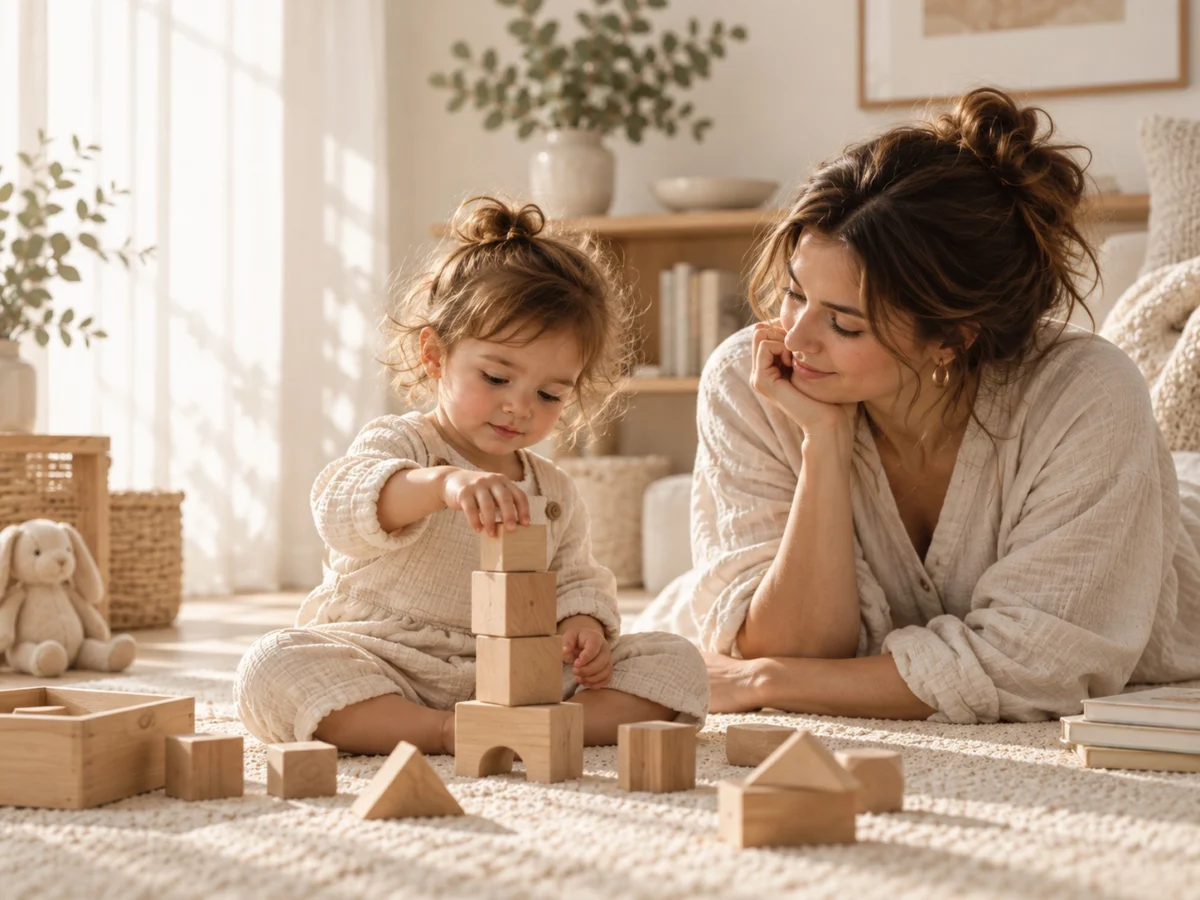
Search for Montessori at home and it is easy to think the method begins with shopping: low shelves, matching trays, a learning tower, carefully selected wooden materials, and a playroom that seems designed for a photograph rather than a family.
The most useful Montessori-inspired question at home is usually not “What should I buy?” but “What could I arrange differently so my child can participate more and wait for adult direction less?” That question can change a hallway, a snack routine, getting dressed, or play without turning your house into a classroom.
Design for access and clarity before you design for appearance
If you want a child to hang up a coat, the hook needs to be reachable. If you want them to choose a cup, at least a few cups need to be somewhere they can access safely. If you expect toys to be returned, the storage has to make sense to the person doing the returning.
This may require only small changes: one low drawer, a sturdy step where appropriate, a basket for shoes, two weather-appropriate clothing choices, or fewer toys visible at once. The goal is not a miniature adult house. It is reducing unnecessary dependence on someone taller.
Order can help because it makes choices legible. Choosing between six visible activities is different from choosing among fifty objects piled together. You do not need radical minimalism or a perfect rotation schedule. Ask whether the child can see what is available, use it, and understand roughly where it belongs afterward.
Before repeating an instruction, look for an environmental obstacle. A backpack hook above the child’s head will not become accessible after the twentieth reminder. Sometimes changing the setup teaches more than improving the script.
Let real household life become part of the learning
Young children are often fascinated by what adults are genuinely doing: pouring ingredients, wiping a spill, carrying laundry, watering a plant, setting out napkins, sorting socks, or putting groceries away. These are not inferior substitutes for special activities. They offer real participation in the life of the family.
The tradeoff is that participation can be slower. A child pouring may spill. Folding towels together may take longer than doing it alone. If the only goal is efficiency, adult takeover will almost always win. If the goal also includes building familiarity and competence, some extra time becomes part of the process.
Adjust the task so success is possible. Use a smaller amount to pour, carry two napkins instead of the whole stack, or give the child one section of the job. “Practical life” at home should fit the actual kitchen, laundry, and schedule you have—not a staged version of family life.
Observe for a moment before helping, correcting, or teaching more
One of the most transferable habits is a small pause. If a child is trying to put on a shoe, is help needed yet? If blocks are being used in an unexpected but safe way, does the play need correction? If water spills, can the child notice and help wipe it before an adult rushes in?
The pause is not a rule to withhold support. It gives you information about what the child can already do. You might demonstrate once, do part together, and then wait. On another day, the same child may ask for help immediately. Competence does not have to be performed at maximum level every time.
Try to distinguish a real limit from an adult preference. The family may genuinely need to leave now; there may not be time for a fifteen-minute shoe attempt. A glass may be unsafe in a certain setting. A sibling may need protection from a piece of equipment. Montessori-inspired autonomy still exists inside family boundaries.
Use the principles selectively so the home still works for everyone
Your home may have pets, a baby sibling, limited space, rented furniture, or a kitchen where a learning tower would block the only walkway. Copying someone else’s setup exactly can make family life harder rather than more independent.
Adapt the principle. If a full self-serve water station creates constant spills in a tiny kitchen, perhaps the child pours from a small pitcher at meals. If low open shelves are unsafe with a crawling sibling, rotate a few accessible materials elsewhere. If you do not want to buy specialized equipment, ordinary bowls, cloths, books, boxes, clothing, and household tasks already provide many opportunities.
Autonomy also does not mean children decide everything. A child can choose between two shirts while the adult decides that clothes are needed. They can help pour water while the adult limits how much is available. Freedom works better when the boundaries are understandable enough for the whole family to sustain.
Start with one friction point rather than a home makeover. Where do you repeat yourself every day? Where does your child constantly need help because an object is inaccessible? Where could a real task be divided so they can own one part? Small redesigns are easier to evaluate and keep.
Montessori at home does not have to look Montessori from across the room. It can simply feel like a home in which the environment, the adult’s patience, and reasonable limits give a child more genuine chances to try, participate, and become capable.