On a preschool tour, it is easy to notice what can be displayed in five minutes: polished art, letters, numbers, worksheets, language programs, themed projects, and beautiful materials. Those things tell you something, but they do not necessarily tell you what it feels like to spend six or eight hours in the room.
Most of a young child’s day is not producing work that can be shown to parents. It is waiting for turns, asking for help, making mistakes, playing, eating, using the bathroom, separating, working through conflict, and living with adults who make hundreds of small decisions.
When choosing preschool, ask less about what children produce and more about how children live while they are there.
Watch how adults respond when things are not going smoothly
Listen to the tone. Do teachers get down to a child’s level? Can they set limits without shaming? Do they seem to know children as people rather than mainly as behavior to manage? The most revealing moment may not be a planned activity but what happens when someone cries, pushes, spills water, or refuses to participate.
Ask how conflict is handled. You do not need a school that promises “no conflict.” You need to understand what adults do when conflict inevitably appears.
Notice whether teachers look available or constantly occupied with managing the group. A classroom can have exceptional materials and still offer little connection if most adult energy goes into keeping children moving through a rigid sequence.
Ask how much time children have to actually play
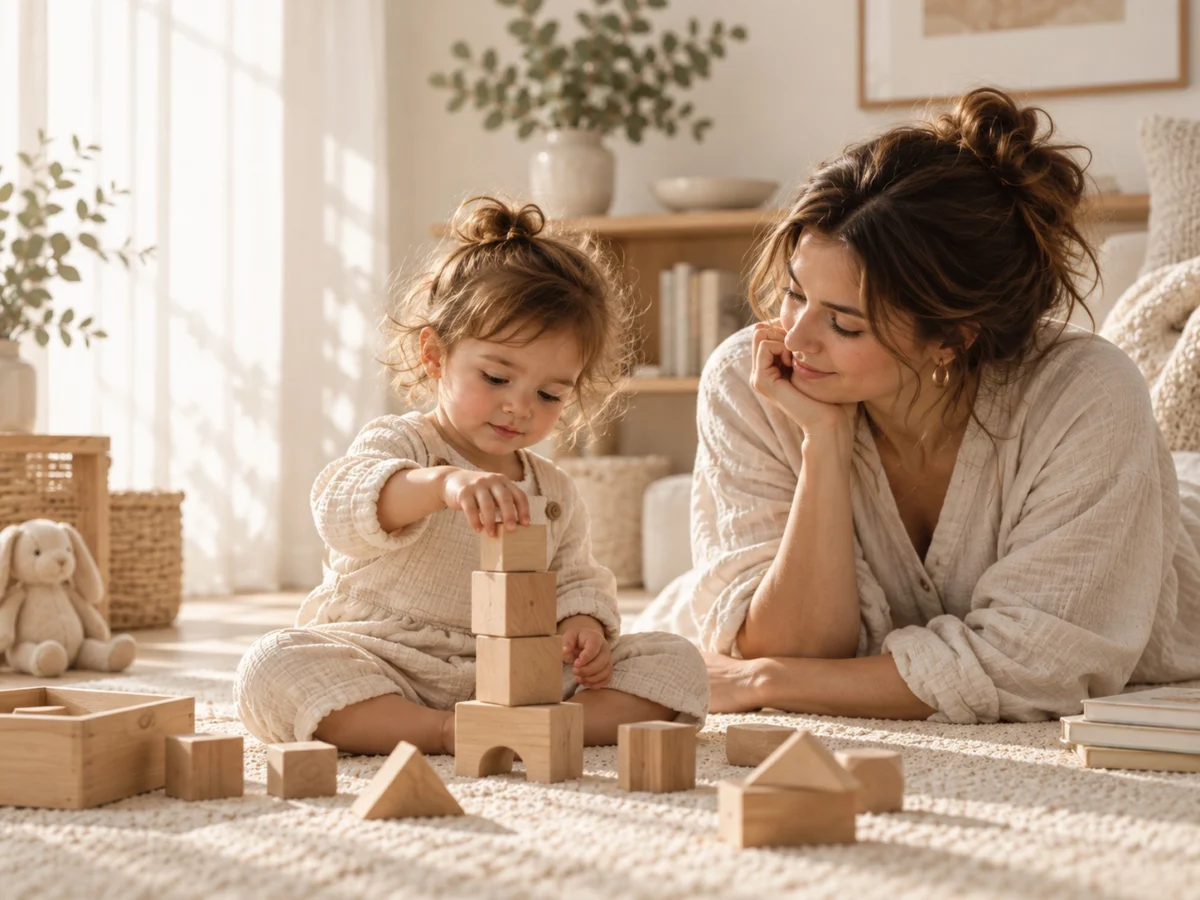
Open-ended play is not leftover time after learning. Young children practice language, negotiation, planning, imagination, frustration tolerance, and problem-solving inside play that no adult has fully scripted.
Ask how much of the day includes child-initiated play, how often children go outside, and whether the whole group must always do the same activity. A packed schedule can look enriched while leaving surprisingly little room for a child to begin something on their own.
It is also useful to ask what happens when a child watches before joining. Some programs allow a gradual entry into an activity; others expect immediate participation. That difference can matter depending on your child’s temperament.
Notice how everyday independence is supported
Do children get time to put on coats, pour water, put belongings away, or try opening a container before an adult steps in? A classroom can be highly efficient while offering very few chances to practice autonomy.
Independence does not mean “figure it out yourself.” Look for a balance: adults are available when help is needed but do not automatically take over every attempt.
Ask about practical routines—meals, toileting, changing clothes, cleanup, and transitions. These moments take up a large part of the day and often reveal the school’s real philosophy better than a brochure does.
Evaluate the rhythm of the day, not only the number of activities
A program may advertise music, language, art, movement, and science and still feel rushed if most of the day happens in short blocks with constant transitions.
Ask how long children have in each part of the day, whether quiet stretches exist, and what happens when an activity is going especially well. Can it continue, or does the schedule require everyone to stop? Predictable structure can coexist with flexibility.
Notice noise and space too. Try to imagine the classroom with every child present for hours, not only during the carefully timed tour.
Family communication is part of program quality
Ask how teachers talk about hard days, emerging concerns, and disagreements with families. Good communication does not require a minute-by-minute report. It means important information can be discussed before it becomes a surprise.
Listen for whether staff can explain why they do something rather than relying only on “that is our policy.” Some rules will be firm, but good communication still gives families enough context to understand the purpose and raise individual concerns.
Ask about staff turnover as well. Stability affects the continuity of relationships and deserves as much attention as the educational program.
Compare the school with your child and family, not with prestige
A highly structured preschool may fit one child beautifully and another poorly. A small, simple program may provide exactly the relationships, play, and pace a child needs even if the tour is less impressive.
Include practical fit: commute, hours, closures, meals, communication, and whether your family can sustain the logistics. An excellent school that makes every pickup an emergency race still shapes family life.
You do not need a perfect preschool. Look for a place whose tradeoffs you understand and where the things you value are visible in the ordinary day, not only in admissions language.
A strong preschool does not need to look like elementary school starting early. It should be a place where your child can be known, play for meaningful stretches, practice independence, live with other children, move, make mistakes, and find adults who can support them as their world grows wider.