

Parenting & behavior
Toddler routines: how to add structure without making the day rigid
Toddlers often do better when they know what tends to happen next, but that does not mean every day needs to run…
Clear, actionable guidance to move from uncertainty to a practical next step.
100 articlesToddlers often do better when they know what tends to happen next, but that does not mean every day needs to run…
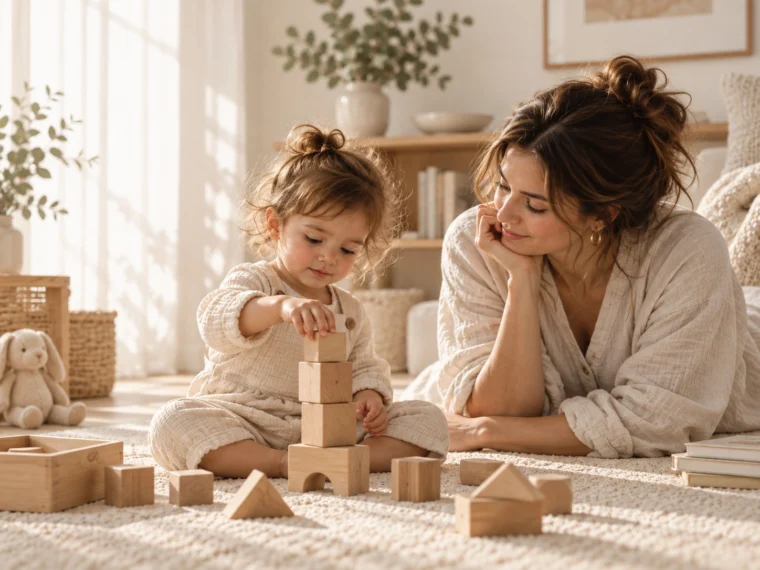
Toddlers yell for excitement, frustration, attention, and sometimes because discovering a powerful voice is fun. Respectful parenting does not require accepting every…
Cleaning up is rarely a young child's favorite way to end play. Treating it as a skill to teach—rather than a character…
Accepting no does not mean liking it. A child can cry, argue, or feel disappointed and still learn that some decisions stay…
Many meltdowns begin not because the next activity is terrible, but because stopping the current one is hard. Concrete warnings, small choices,…
Ending screen time is hard partly because the activity usually stops while it is still interesting. Clear limits set before the screen…
Independent play rarely appears because an adult says “go play by yourself.” It tends to grow through small stretches of child-led play,…
Montessori at home does not require perfect low shelves or a collection of special wooden materials. Some of the most useful ideas…
Hitting needs a clear, immediate limit, but a behavior does not have to become an identity. You can stop the hit, protect…
Biting needs a quick response because it can hurt. But the child does not need to become “the biter.” Stopping the behavior,…

A nap routine can give the day shape without taking over the day. The goal is not perfect timing; it is having…

Potty training often feels harder outside the house because familiar cues disappear. The goal is not to control every minute but to…