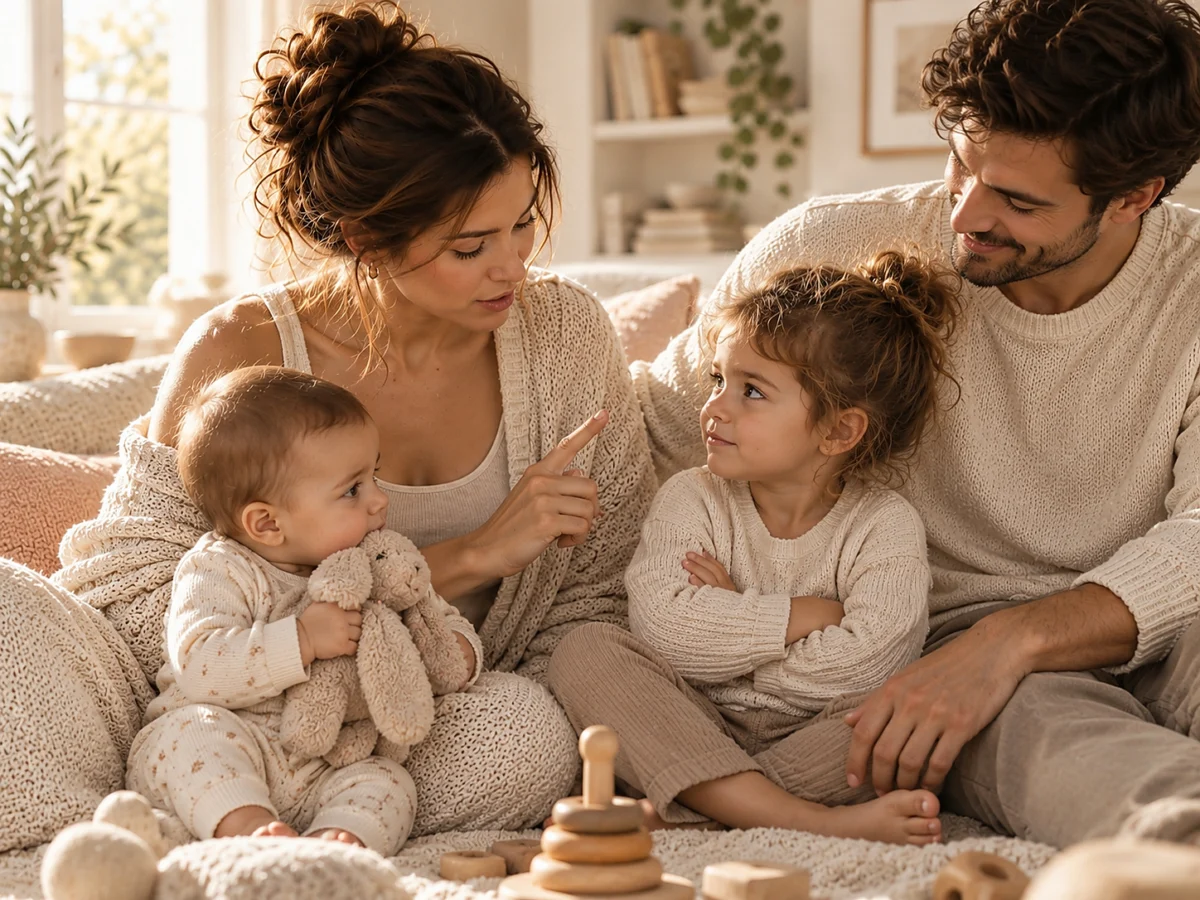
A child can spend months kissing the belly, choosing a tiny outfit, and telling everyone they are excited about the baby. Then the newborn comes home and the same child suddenly wants to be carried, interrupts every feeding, says the baby should go back, or falls apart over routines that were manageable a week earlier.
That change can feel alarming, especially when adults expected the preparation to produce a happy transition. But a new sibling is not only a joyful addition. For the older child, it is also the end of a family structure they knew well.
They can love the baby and still grieve the loss of being the only child, the youngest child, or the child who had easier access to you.
Make room for jealousy without turning it into the child’s identity
Adults often try to protect the sibling relationship by insisting on positive feelings: “You love your baby sister, right?” “You’re so lucky.” The intention is warm, but it can leave little room for anger, disappointment, or indifference.
If your child says, “I don’t like the baby,” you do not need to correct the emotion. You can answer, “It’s hard having such a big change in the house.” That validates the experience without approving harmful behavior.
Jealousy also rarely arrives as a neat sentence. It may look like suddenly needing help with shoes, asking to be fed, climbing into your lap whenever you hold the baby, waking more often, or becoming unusually controlling about toys. Try to notice the need without labeling the child “jealous” in front of them. Labels can turn a temporary adjustment into a role.
Protect connection without making the baby responsible for every frustration
When a newborn is present, many necessary limits get explained through the baby: “I can’t because the baby is eating,” “be quiet because the baby is sleeping,” “wait because the baby needs me.” From the older child’s point of view, the baby can quickly become the reason life keeps saying no.
When possible, use more neutral language: “My hands are busy; I’ll come when I’m done.” “We need quieter voices for a while.” This does not hide reality. It simply avoids making the baby the villain of every limit.
Connection does not require elaborate compensation. Ten focused minutes with a book, helping with breakfast while the baby is with another adult, or keeping a familiar bedtime ritual can be more powerful than occasional grand outings. What matters is repeated evidence that the older child still has access to you as themselves, not only as “the big sibling.”
Invite participation without making it a job. They may enjoy choosing pajamas or bringing a diaper. They may also have no interest. Both are acceptable. Becoming a sibling does not make a young child responsible for caregiving or constant maturity.
Hold boundaries around the baby while protecting the older child’s boundaries too
Mixed feelings are allowed; unsafe actions are not. “You can be angry at the baby. I won’t let you hit.” “You wanted me to hold you. I won’t let you pull the bottle away.” That distinction is central: the emotion does not need to disappear before the limit can be clear.
As the baby grows, the older child may need protection from the younger one too. A crawling baby will grab toys, knock down buildings, and enter spaces that once belonged only to the older sibling. “You’re older, just share” can deepen resentment.
Protected toys, a shelf the baby cannot reach, or periods of uninterrupted play can communicate that having a sibling does not erase personal boundaries. Fairness should move in both directions.
It can also help to make visible the moments when the baby waits. “The baby is fussing, and I’m finishing your book first.” You do not need to stage these moments, but naming them helps correct the feeling that family life always moves toward the newborn.
The first months do not predict the sibling relationship
Some older children are fascinated immediately. Some mostly ignore the baby. Some move between tenderness and fury in the same hour. None of those patterns gives you a reliable forecast of the next ten years.
Try not to make early affection a test. Forced kisses, repeated questions about how much they love the baby, or constant praise for being “such a good big sibling” can make the role feel performative.
The relationship will grow as the baby becomes more interactive, as routines settle, and as both children change. Your job in the early stage is less about creating instant sibling closeness and more about protecting safety, making room for mixed feelings, and showing the older child that their place is still secure.
The family becoming bigger does not have to mean the older child becomes smaller inside it.