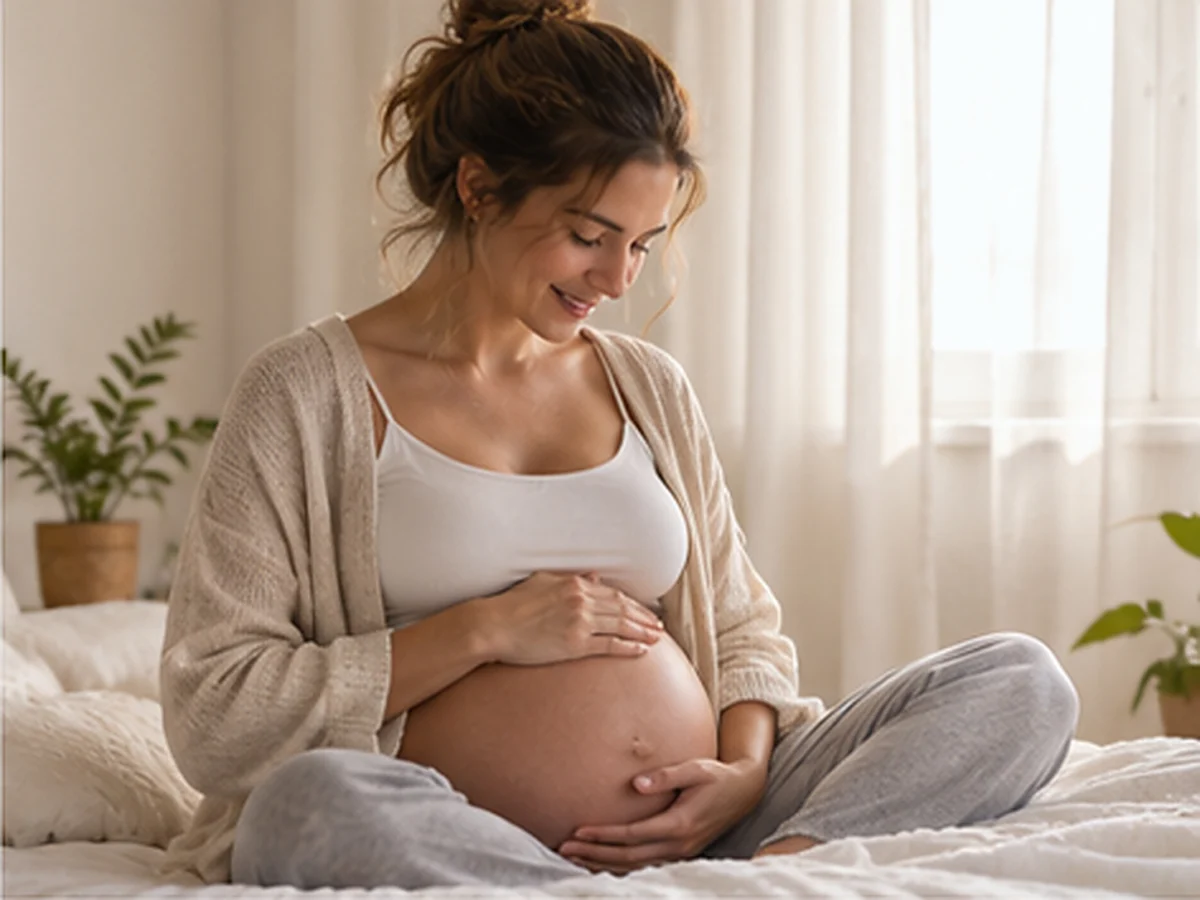
Pregnancy photos are often presented as a future treasure: something you should make time for now because one day you will be grateful you did. That idea can be lovely for someone who wants the pictures. It can also create a surprising amount of pressure when posing, displaying your changing body, or organizing a maternity shoot feels uncomfortable rather than meaningful.
Not wanting pregnancy photos is not evidence that you are failing to appreciate pregnancy. A memory and a photograph are related, but they are not the same thing, and an important season does not become more real because it was carefully documented.
Decide what you actually want to remember
Before deciding whether you “should” have photos, it can help to ask what you hope to keep from this period. Maybe you want a record of your changing body. Maybe you care more about remembering your home before the baby arrived, the way your partner looked at you, a particular meal, a note you wrote, or the ordinary routines that will later feel far away.
Those are different memory goals. A styled photo session is one way to serve some of them, but it is not a universal container for pregnancy. A journal entry, a voice note, one candid image, a saved card, or even a story you tell later can carry more emotional meaning than dozens of pictures you never wanted to take.
If the main reason you are considering photos is fear of future regret, notice that regret is hypothetical while your current discomfort is real. You can make a small compromise if you want one—perhaps one informal picture—without committing to an experience that feels performative.
Separate “no photos” from “no memories”
There is a wide middle ground between a full maternity shoot and having no visual record at all. You might prefer pictures where pregnancy is visible but not staged, a single photo with your partner, everyday images in which your belly is not the subject, or photographs you keep privately rather than share.
You may also genuinely want no pictures. That choice does not need to be corrected. Some people experience being photographed as intimate, exposing, or simply tiring during a period when their body already receives more public attention than usual.
It can help to think of documentation as something that should support the memory rather than replace the experience. If taking the picture makes you spend the whole afternoon monitoring how you look, the photograph may preserve an image while making the day itself less enjoyable.
Make room for other people’s wishes without giving away the decision
A partner, parent, or close friend may care deeply about having a pregnancy photo. Their wish can be sincere and still remain separate from your consent. Because your body is the one being photographed, you get to decide what kind of image feels acceptable, who can keep it, and whether it can be shared.
If you want a compromise, make it specific. You might agree to one picture at home rather than a shoot, choose clothing that helps you feel like yourself, ask that the photo stay private, or suggest a picture that focuses on the relationship rather than your belly. A compromise should still feel like a choice, not a disguised obligation.
If you do not want any image, you can say that too. “I know this would mean something to you, but I do not want to be photographed right now” is enough. You do not need to build a legal case for why your preference is valid.
Let your preference change without turning it into a test
You may dislike photographs in one trimester and want one later. You may plan a picture and change your mind on the day. You may take several and decide that none should be posted. None of those shifts means you were inconsistent; pregnancy itself keeps changing, and your comfort can change with it.
Try not to make the decision into a referendum on whether you are sentimental enough, grateful enough, or “doing pregnancy” correctly. There is no required visual archive of this transition. The most useful standard is whether the way you document it feels like it belongs to you.
Years from now, you may treasure an image, a written sentence, a memory, or something you cannot predict yet. You are allowed to preserve this period in the form that fits your actual experience rather than the form pregnancy culture tells you to want.